

Dear readers,
I have been a bit mystified by the economic data over the last few months. With the combination of tariffs, inappropriate fiscal expansion, immigration crackdowns, and persistently elevated long-term interest rates, why had we not been seeing significant drag on job growth? Shouldn’t businesses be finding it difficult to justify investment and expansion considering the elevated cost of capital and general uncertainty?
Well, it’s all a little bit less mystifying following today’s jobs report. Not only was job growth in July anemic (73,000 jobs added), the jobs numbers for May and June were both revised down to near zero — that is, since President Trump began his tariff-palooza in April, the US economy has added almost no jobs at all.
This makes the president right about one thing: It really is time for interest rate cuts, and the Fed almost surely will cut rates in September. The two Republicans on the Federal Reserve Board who wanted to cut rates in July have already been saying the labor market is weaker than is publicly understood — in particular, Christopher Waller’s statement that “once we account for expected data revisions, private-sector payroll growth is near stall speed” is looking prescient this morning. Waller and his colleague Michelle Bowman have both argued that tariffs tend to cause a one-time increase in the price level, and that the Fed should “look through” the fact that imported goods are getting more expensive now and focus on labor market weakness that could be exacerbated if interest rates remain too high.
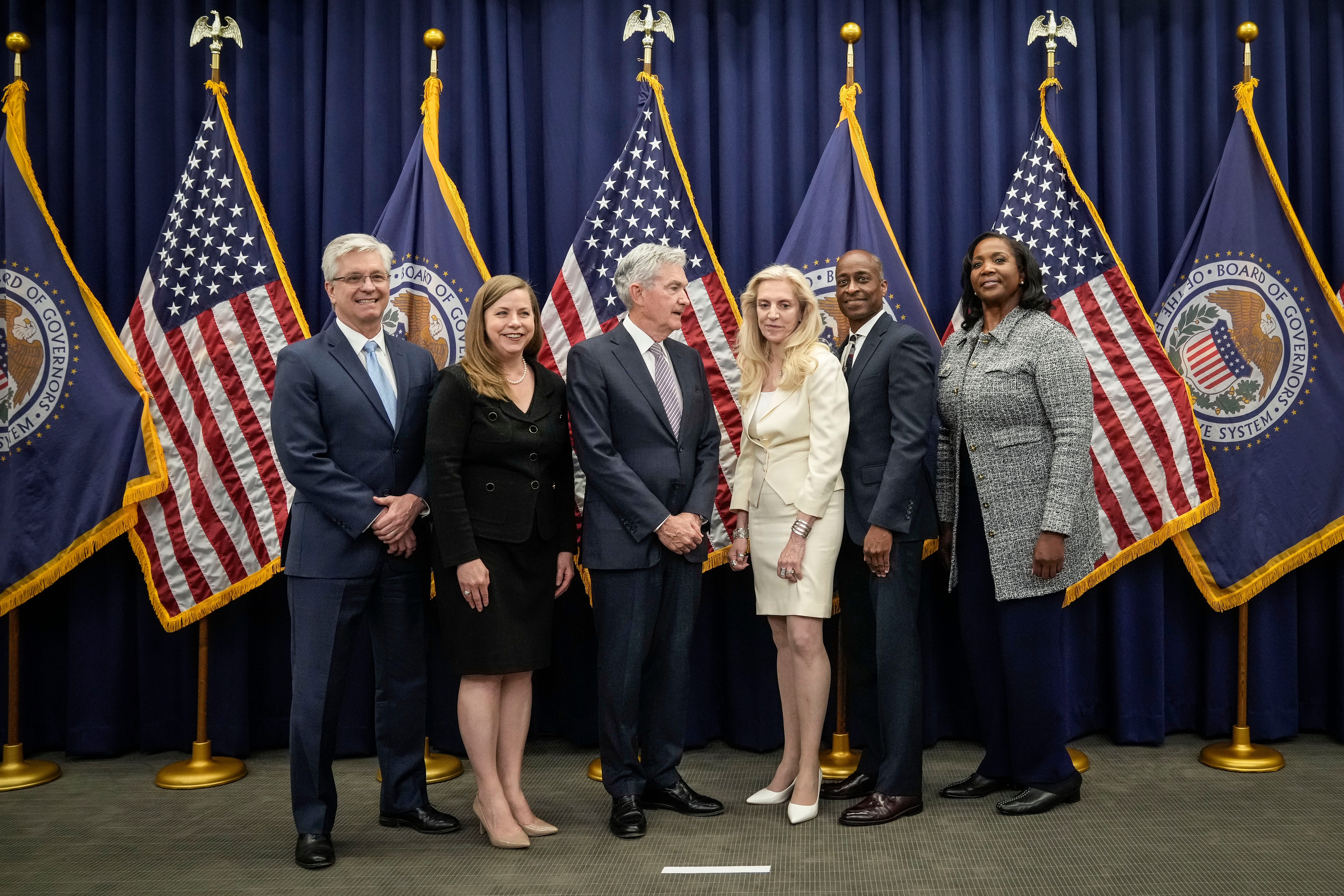
Bowman and Waller both worry that the labor market is frozen now but might soon unfreeze in a negative direction. As Bowman notes, firms are stuck: They lack a sufficiently positive business outlook to add workers, but they also don’t want to lay off workers, because of their “fresh” memories of how hard it was to staff back up after pandemic layoffs. Instead, they have been maintaining their staffing and accepting lower profit margins. She warns that won’t last forever: “If demand conditions do not improve, firms may have little option other than to begin to lay off workers, recognizing that it may not be as difficult to rehire given the shift in labor market conditions.” Waller issues a similar warning: “When labor markets turn, they often turn fast. If we find ourselves needing to support the economy, waiting may unduly delay moving toward appropriate policy.”
Waller and Bowman are both arguing for the president’s preferred monetary policy, but their case for why we need that policy — basically, that the economy may be just about to go to hell — could not be farther from the president’s own take, which is that the economy is great but it also, for some reason, needs support from lower interest rates.
While we will probably get an interest rate cut in September (and more rate cuts to follow if the labor market remains weak) the president’s core economic challenge remains what it was last month: the primary economic problems in the US are not monetary and cannot be fixed with monetary policy. The budget deficit is too large, and so the Fed has limited space to stimulate the economy without driving inflation. High and uncertain tariffs make it difficult for businesses to make manufacturing investments, regardless of whether those investments rely on domestic or global supply chains.
The one caveat that should be noted is that immigration has cratered under President Trump, and as a result, the rate of job growth needed to keep unemployment stable is a lot lower than it used to be. Labor economist Jed Kolko estimates that the “breakeven” rate of job growth necessary to keep up with population growth has fallen by half — just 84,000 jobs per month, down from 166,000 early last year. So just as the Biden team was a little too boastful about job growth during his presidency (a lot of those jobs were due to irregular immigrants swelling the population), the political impact of slower job growth should be muted by the fact that there are now fewer new people seeking jobs. That said, we’re not even hitting that reduced pace of 84,000 jobs per month. And the combination of lower immigration and ICE raids is causing a lot of disruption in the economy — workers may appreciate how these policies tighten the labor market, but workers are also consumers who stand to face higher prices and shortages of goods and services.
As Jason Furman wrote before these jobs numbers came in, it seemed tariffs were already boosting inflation and dampening growth at the margin, albeit not to a sufficient degree to tip the economy into recession. Now the jobs numbers are also showing significant weakness, even though they’re not yet showing the bottom falling out of the labor market. The last remaining bullish economic indicator is the stock market. Like Furman, I can’t explain why stocks are doing so well in spite of everything. But the rest of the economic data appears to be aligning with the idea that the economy is weakening.
Very seriously,
Josh
It seems to me that the problem with the economy is not laid at the feet of the Fed. They can lower rates, but that doesn’t mean that companies are gonna be more inclined to hire or invest because they don’t know what’s coming.
I think there's an under-discussed (at least today) AI element to the job market. Firms are investing massive amounts into technology that they believe will increase productivity and/or reduce their payrolls. Don't these two factors work together to depress hiring, at least in the short term?
AI investment crowds out hiring-based growth options; and the prospect of AI efficiency gains "just around the corner" make firms reluctant to hire now. This is consistent with the higher unemployment numbers for recent grads, at least if you believe that AI will first replace entry-level jobs.
It's not the full story - sectors that don't expect massive AI gains are also down. But I think it's worth mentioning.
And breaking news: The President is now monkeying with the BLS in a way that may make it harder for the Fed to justify a rate decrease.